
Pastoral Support
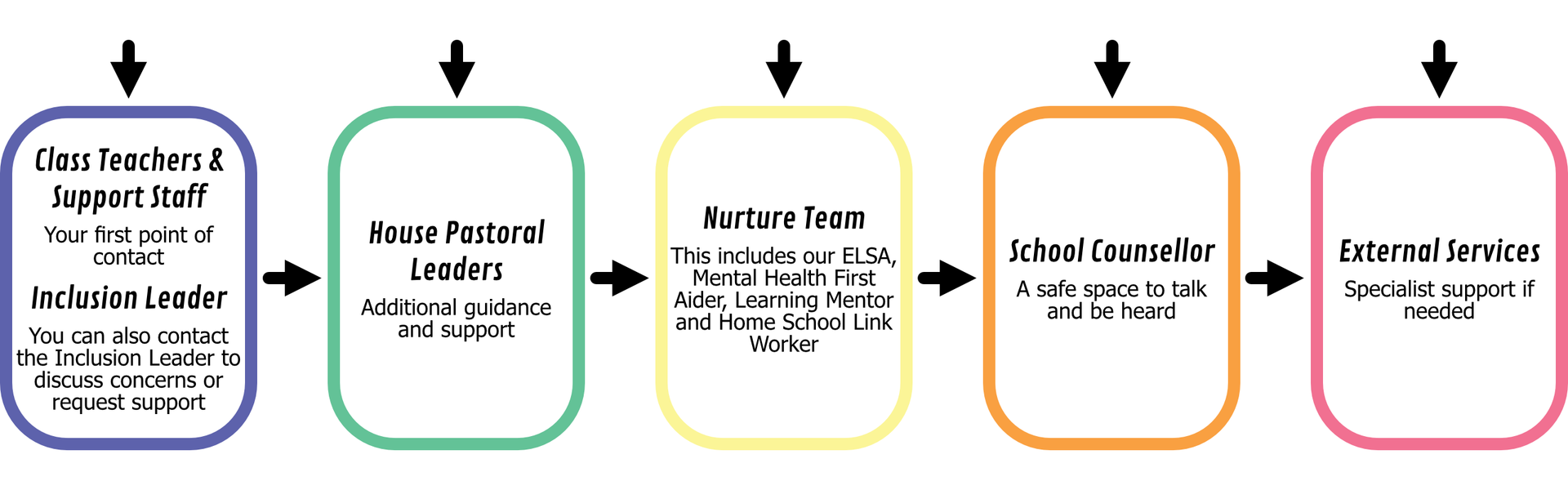
Our school is committed to nurturing every child’s wellbeing through a strong, layered network of pastoral care. From the everyday support offered by class teachers and support staff, to the guidance of pastoral leaders, our nurture team and access to our school counsellor or external specialists when needed, we work closely with families to find the right help at the right time. Support is flexible, easy to access and centred on creating a safe, understanding environment where every child can thrive.
Please feel free to contact your class teacher as a first point of contact. Our Inclusion Leader can also be contacted should you wish to discuss concerns or request support. Our Learning Mentor, Home School Link Worker and School Counsellor, Karen Rickett, can also be contacted directly. For general information or if you aren't sure who to contact, please email the school office who can put you in touch with the right support.
Nuture Team
Meet the Nurture Team

Donna Jauffur
Mental Health First Aider

Sharon Illes
Mental Health First Aider
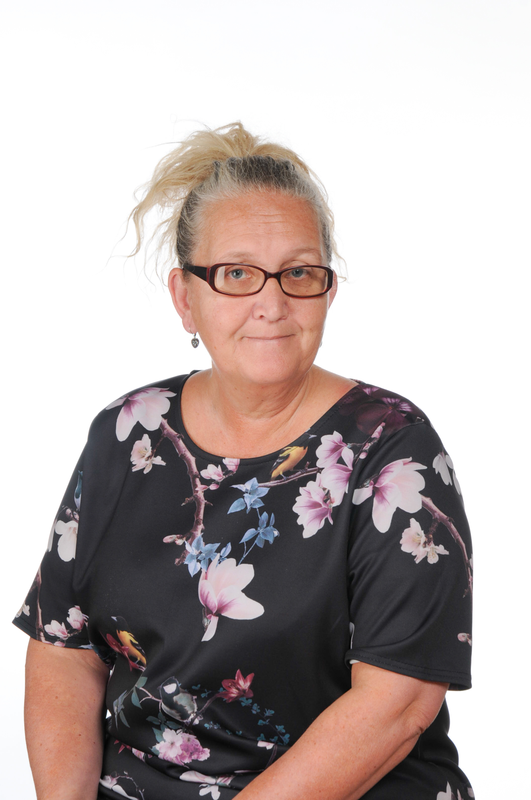
Jo Smith
Emotional Literacy Support Assistant (ELSA)

Karen Rickett
Learning Mentor
Home School Link Worker
School Counsellor
Karen can be contacted via email at:
Mental Health First Aiders
At our school, children’s emotional wellbeing is just as important as their physical health. That’s why we have trained Mental Health First Aiders (MHFA) as part of our staff team.
What is a Mental Health First Aider?
A Mental Health First Aider is a member of staff who has received specialist training to support children’s mental and emotional wellbeing.
In the same way that a physical first aider helps if a child is injured, a Mental Health First Aider helps if a child is feeling worried, upset, overwhelmed, or struggling emotionally.
What do Mental Health First Aiders do?
Mental Health First Aiders can:
- Listen to children in a calm, supportive, and non‑judgemental way
- Notice early signs that a child may be finding things difficult
- Offer reassurance and age‑appropriate coping strategies
- Help children feel safe, heard, and understood
- Signpost children and families to additional help if needed
Mental Health First Aiders do not diagnose mental health conditions, but they are trained to offer appropriate initial support and guidance.
When might a child be supported?
Children may speak to a Mental Health First Aider if they are experiencing:
- Worries or anxiety
- Low mood or unhappiness
- Friendship or playground difficulties
- Changes at home (such as bereavement or separation)
- Feeling overwhelmed or stressed
Support is always age‑appropriate, sensitive, and focused on the child’s needs.
Working with parents and carers
Mental Health First Aiders work in partnership with parents and carers. If a child needs ongoing or additional support, this will always be discussed with families.
Having trained Mental Health First Aiders in school helps ensure that concerns can be noticed early, and that children receive the right support at the right time.
Emotional Literacy Support Assistants (ELSAs)
At our school, we believe that children learn best when they feel happy, confident and emotionally supported. One way we support this is through our trained Emotional Literacy Support Assistants (ELSAs).
What is an ELSA?
An ELSA (Emotional Literacy Support Assistant) is a member of school staff who has received specialist training to help children develop the emotional skills they need to cope with everyday challenges.
ELSAs work with children to support their emotional development, self‑awareness, and resilience, helping them to better understand and manage their feelings.
What do ELSAs do?
ELSAs usually work with children one‑to‑one or in small groups and may help with:
- Understanding and managing emotions
- Building self‑esteem and confidence
- Developing friendships and social skills
- Coping with worries or anxiety
- Managing change, loss, or big emotions
- Learning strategies to stay calm and regulate feelings
Sessions are carefully planned, age‑appropriate, and tailored to each child’s individual needs.
What ELSAs are not
ELSAs:
- Are not counsellors or therapists
- Do not diagnose mental health conditions
Instead, they provide early, supportive intervention to help children build emotional skills and confidence.
How are children supported by an ELSA?
Support from an ELSA may be suggested by school staff or discussed with parents if a child would benefit from extra help with their emotional wellbeing.
All ELSA support takes place in a safe, nurturing environment, where children are encouraged to talk, reflect, and learn practical strategies they can use in school and at home.
ELSAs play an important role in helping children feel supported, understood, and ready to learn.
Home School Link Worker
A Home School Link Worker (HSLW) plays an important part in supporting children and families by strengthening the connection between home and school. The role focuses on removing barriers that may affect a child’s wellbeing, attendance, behaviour, or readiness to learn, helping every pupil to thrive. An HSLW offers a friendly, confidential point of contact for parents and carers, providing guidance, early help and signposting to services when additional support is needed. They work closely with staff, families, and external agencies to promote positive relationships, build confidence, and ensure that children feel safe, supported, and understood both in school and at home.
What concerns do HSLW's support?
- Families who are experiencing change such as transition, parental separation or bereavement
- Families experiencing financial difficulties or financial poverty
- Parents having difficulty managing their child’s behaviour
- Attendance and punctuality
- Home-School relationship
- Lack of confidence and low self-esteem
- Families needing support with issues impacting on family life eg; illness, domestic violence, debt or addiction
HSLWs can help by providing:
- One to one support and advice
- Awareness of other agencies and support services/sign posting
- Access to food or hygiene banks
- Information on support groups for parents/carers
- Guidance on promoting positive behaviour
- A flexible and open minded approach
Learning Mentor
What is a Learning Mentor?
A Learning Mentor is a trained member of staff who works with children to identify and overcome barriers to learning. These barriers may be emotional, behavioural, social, or linked to confidence, attendance, or personal circumstances.
Learning Mentors offer practical, nurturing support to help children feel confident, motivated and ready to learn.
What do Learning Mentors do?
Learning Mentors work closely with pupils, parents, and staff to provide targeted support. Their role includes:
- Liaising with staff to identify learners who would benefit from mentoring
- Helping children who are finding school difficult to overcome barriers to learning
- Supporting self‑esteem and confidence‑building activities
- Listening to children and helping them work through a range of issues
- Creating agreed action plans with pupils, setting clear aims and reviewing progress
- Monitoring attendance and punctuality
- Running social skills, friendship, and empowerment group sessions
- Organising drop‑in “offload” sessions where children can talk through worries or concerns
- Providing group support such as anger‑management sessions
- Supporting pupils with transitions, including KS2–KS3 transition to secondary school
- Liaising with the Home‑School Link Worker and other professionals
- Acting as a positive role model for pupils
Where appropriate, Learning Mentors may also:
- Advise parents and carers on behaviour and support strategies
How are children supported by a Learning Mentor?
Support from a Learning Mentor may be identified by school staff or discussed with parents when a child would benefit from additional help. Sessions usually take place one‑to‑one or in small groups, in a calm and supportive environment.
Support is always individualised, strengths‑based, and focused on enabling children to make positive progress.
Working with parents and carers
Learning Mentors work in partnership with parents and carers, as well as teachers and wider support staff. Any planned mentoring will be discussed with families, and strategies may be shared to help provide consistency between home and school.
Learning Mentors play a vital role in helping children feel supported, confident, and engaged in their learning journey.
School Counsellor
At St Stephen’s School, we are committed to supporting the emotional wellbeing of every child. Alongside academic learning, we recognise that children may sometimes need a safe and supportive space to explore their feelings, build confidence and develop emotional resilience. Our School Counselling Service is one of the ways we provide this support.
Counselling offers children time with a qualified, trained professional in a calm and confidential environment, where they can talk, reflect and express themselves freely. Each child is at the heart of the process and is supported with empathy, respect, and understanding.
How counselling sessions work
Counselling sessions are tailored to meet each child’s individual needs and are delivered using a person‑centred approach. Sessions may include a range of age‑appropriate activities such as:
- Art and drawing
- Crafts and creative activities
- Play and imaginative work
- Storytelling
- Games and sensory activities
- Dog Therapy
These approaches help children to communicate their feelings and experiences in ways that feel natural, safe, and comfortable for them.
How counselling can help
Children may benefit from counselling support for a variety of reasons, including:
- Anxiety or worries
- Friendship or social difficulties
- Changes at home or family circumstances
- Low mood or reduced confidence
- Managing emotions
- Bereavement or loss
- Behavioural challenges
Counselling is not only for times when children feel overwhelmed; it can also support emotional development, self‑awareness, and resilience, helping children to thrive.
Accessing the service
Parents and carers can access the School Counselling Service by contacting the school. You are welcome to email Karen directly to arrange an initial conversation or meeting. This provides an opportunity to discuss your child’s needs and explore whether counselling or another form of support would be most appropriate.
We believe that strong partnerships between home and school are essential. If you feel your child may benefit from counselling, please do get in touch — we are here to help.
Professional standards
"As a registered member of the British Association for Counselling and Psychotherapy (BACP), I adhere to their ethical framework. This ensures that the counselling service provided is professional, safe, confidential, and grounded in recognised best practice."
Karen Henderson‑Rickett MBACP